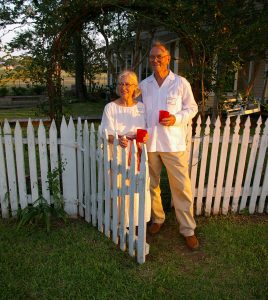
Discovering The Zapalac Farm
Here is the story of how Clovis discovered the property that would become our farm.
Clovis was driving around looking for a farm for our family’s new weekend place, when he turned down Kramr Road at the Brethren Church, and saw a man walking on the road. Clovis parked, got out of his car, and walked to greet the man, who turned out to be Joe Kramr, who lived nearby. Clovis introduced himself and asked Joe whether he knew of any farms for sale in the area. Joe said, “Well, my sister and her husband live up the road, on top of the hill, and they want to sell their place.” Joe pointed to the farm on top of the hill, and so Clovis got back into his car and drove up the driveway to the Zapalac farmhouse. The dog would have barked, and Mary Zapalac would have come out to see who was coming.
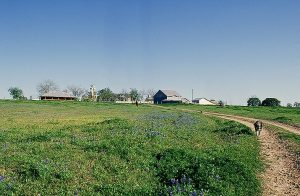
Mary and Joe Zapalac had lived on this farm their whole lives. Now they had been thinking that it was time for them to move into town, and that is why they were interested in selling their farm.
And so the Zapalac Farm became the Heimsath Farm. The Zapalacs moved into town, and continued to welcome us and involve us in local connections and traditions. Before they moved to town, they would need to butcher their last hog, and you had to butcher the hog while the weather was cold. It was January, and they invited us to help. (See “Hog Butchering” chapter for details and photos.) The Zapalacs also helped us learn how to bake kolaches, make pickles, make sauerkraut, make wine with the grapes on the back fence, butcher chickens, and to make cottage cheese, and to churn butter from raw milk.
The house the Zapalacs moved into on the square was a cottage that had belonged to Joe’s late sister, which was next door to a former tire shop, and on the same street as the nineteenth century brick building called the Zapp Building, which in years past it had been the Knippel general store. Now the Zapp Building was vacant except for the upstairs tenants, the Jochec brothers (see the “Country Place Hotel” chapter for more details).
For years after the Zapalacs moved into town, they generously welcomed us and taught us so much about country living. They became almost like our extended family in Fayetteville.
For the next two years we continued spending weekends and summer vacations in the country, while still living during the week in the city. But it was different now that we had our own farm, instead of renting as we had in Warrenton, or sharing a house, as we had been doing with the Macdaniels. Now we had a whole farm, and we had a vegetable garden, and chickens. I would think, “How am I going to fix dinner, pack everyone into our van, and get everyone fed. I would put the cooked dinner in an ice chest, and serve plates while we were driving. Everyone would eat, then I would collect their dishes (paper plates whenever possible) and by the we got back to 201 Westmoreland it would be time to go to bed, and be ready for school and work the next morning.
We brought the cat and our dog (Ophelia) back and forth with us, and one Memorial Day weekend our cat climbed up into the tall tree behind the farmhouse, and would not come down. I think John finally climbed up the tree to retrieve her.
At one point we had baby chickens, or maybe ducks, that had just hatched, and needed to be cared for, so we brought back to Houston with us in the van, and then brought them with us back to the farm the next weekend. It was little bit crazy. When we would see our Houston friends at various events they would ask, “How are the chickens?”
Then eventually we realized that our home was at the farm, and we moved there to live full time.
After Joe Zapalac died, Mary Zapalac continued to be our Aunt Mary, helping me with gardening advice, teaching me to make wine with the grapes that grew on the fence, showing me where to find dewberries, teaching our daughters to bake kolaches, and treating us all to her homemade angel food cake on special occasions.
The Heimsath Farm
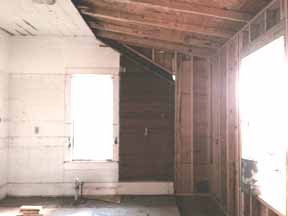
When we first moved to the farm, it was for weekends, and we had a lot of fixing up we wanted to do. The Zapalacs had wallpaper on all the walls downstairs — I have pictures of that. The wallpaper was falling off, it almost as if there was cheesecloth on the wall and then the wallpaper was stuck on that. The walls were wood, there was no sheetrock.
We brought our army cots, the ones we had used in Warrenton, and sleeping bags. We had folding director’s chairs. We removed the wallpaper and painted the walls, and we removed the linoleum rugs from the floors, and painted the floors. We would go to Brenham, to the antique shops, and buy chairs and other furniture. We bought pie safes. The children would help me remove the varnish or paint from old furniture, then sand it and repaint. It was a lot of work.
IMAGE OF HOUSE BEFORE RENOVATION – INTERIOR
When we first moved to the farm, Clovis and I slept downstairs, with Virginia in the iron crib. (picture of the van carrying the iron crib on the roof)
The kitchen still had the old iron wood stove. Mary Zapalac had been using an ice box — she would a block of ice at the ice house, and it would keep the food cold for a week, then she would buy a new block of ice. But put in an electric refrigerator. We must have bought it used, I never remember buying a new anything. The refrigerator was very old. We kept the wood stove, and used it to heat things, and to keep the kitchen warm, but we bought a real gas stove for cooking. And then we bought a dishwasher. I remember through the architectural firm we were able to get a good price on a dishwasher. We used it, but it did not work terribly well. It turned all the dishes orange. The reason was, our water had so much mineral content, it was safe to drink but it tasted terrible. We would fill 5-gallon containers with water from town, that we got from the Macdaniel house.
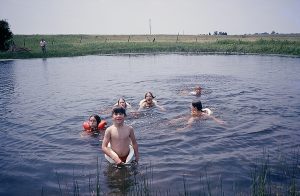
Very often we would join the Macdaniels for meals and doing fun things like swimming in the pond.
An early renovation was to open up the wall of the kitchen and dining room to provide a more spacious area. We built the greenhouse with steps going down to ground level, and translucent material that let in a lot of light. I could arrange all the plants and create a greenhouse that was the part of house. (find the pictures and dates.)
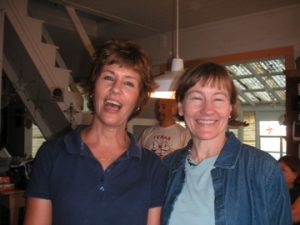
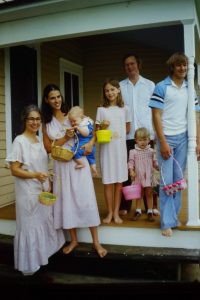
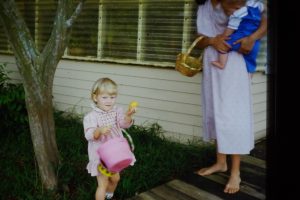 Mary Jane at Farm Easter 1981
The Kitchen
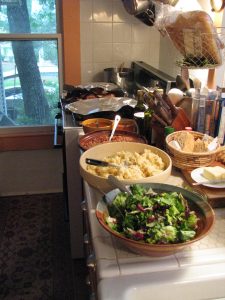
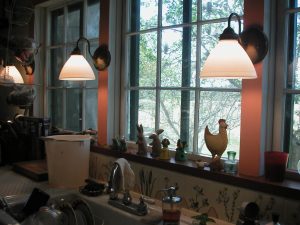
This picture above shows the outside of the greenhouse. You can see the louvered windows. Below is what the greenhouse looked like inside.
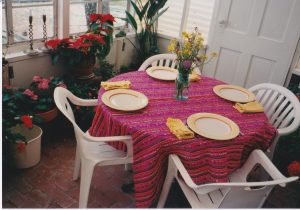
The table set for dinner in the greenhouse. You can see the brick floor and the louvered windows. The original greenhouse had corrugated translucent plastic panels. The louvered windows were part of a renovation that made it much nicer. The important thing to know is that Ben’s neighbor was getting rid of their greenhouse and left themon the street. Ben picked them up and brought them to us, and we used them exactly as they were. We had a porpane heater in the greenhouse so that it was reallly an extension of our living area. The tablecloth came from Mexico City, when Catherine and I went downtown and shopped for fabric in the fabric district.
There was a ladder that went to the second floor. There was no staircase, so in order to go upstairs to the bedroom, you had to climb up the ladder. The Zapalacs had used the second floor for storage, but we wanted to use the upstairs for the children to sleep, on army cots with sleeping bags, as we had done in Warrenton.
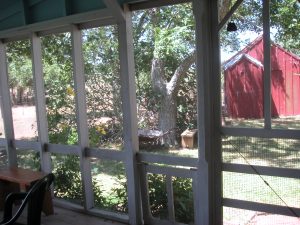
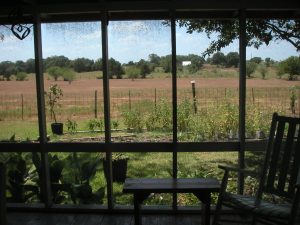
The view of the house from the back garden shows the screen porch where we ate many of our meals. We expanded the screen porch so that it would become a very important part of our living area.
When we added the kitchen refrigerator it was right next to the back steps leaving to the garden. The pantry off the kitchen is the space next to the screen porch.
When bought a washer and a dryer, and along with a freezer they were on the screened porch.
We realized when we moved into the house that we needed a staircase and we had to hire someone who could do this work for us. I think the Zapalacs recommended Pete Janisch, and Clovis was very happy he could talk with Pete and Pete understood the Pioneer Texas Architecture concepts that Clovis had been writing about. Now here was Pete Janisch, who did not need a blueprint or architectural drawing, but knew how to build a staircase, or whatever you needed for your home.
The Zapalac house had wallpaper that had been nailed on, so the walls had a lot of nails in them. Wherever there was a hole, for example a rodent entrance, it was covered by the round top of a tin can, nailed to cover the hole, and painted to match the wall. Everything was painted white. The ceilings were of pressed metal.
There was no basement, no slab, the house was sitting on top of concrete blocks., as was typical of rural homes at that time. There was a power line and telephone line that came up from the road to the house, and an overhead power line from the house to the barn.
When we used the dryer, we had to upgrade the electrical system to support the increased requirements.
The water came from a well, and the well was right inside the gate when you walked in, with a pump house adjacent to it. We were very concerned about the well because the water smelled like sulfur and was brown coming out of the faucet. We had the water pumped into a separate tank in the pump house, so we installed a gadget that would pump the water into a vessel that wired around to aerate the water and emit the hydrogen gas, so that it would be more pleasant for drinking, cooking, and bathing.
We used to full up five gallon plastic jugs with water from town, that tasted a lot better. The town water in Fayetteville was pumped from artesian wells, and from there pumped to all the buildings within the town limits. When we bought the Country Placee Hotel, we had a supply of town water. Before that we were bringing town water from the Macdaniel house.
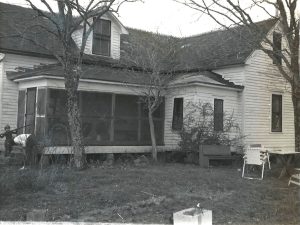
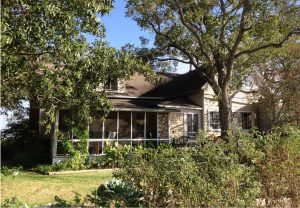
The house did not have a screen porch when the Zapalacs sold it to us. We added the screen porch shown here, and later we expanded it to the larger porch you can see in some of the other pictures.
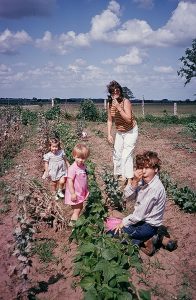
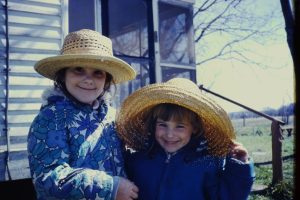 Sara and Virginia at the Farm – Spring 1974
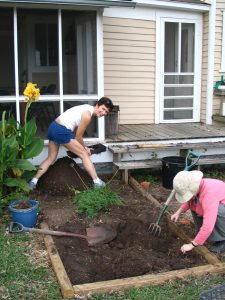
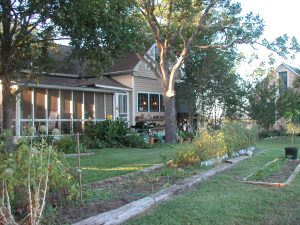
The picket fence and the driveway
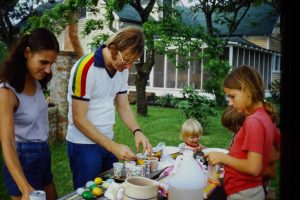
When visitors arrived or left, we would line everyone up to take pictures, and usually it would be in front of the picket fence, facing the driveway. Clovis built a retaining wall of stone so that cars would stop a few feet away from the fence, and we could enjoy the patch of lawn under the tree.
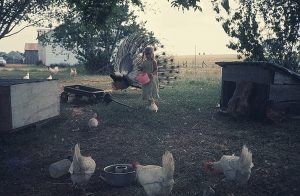
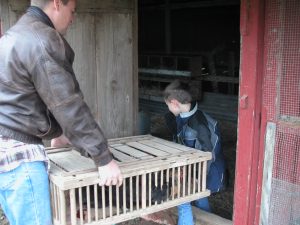
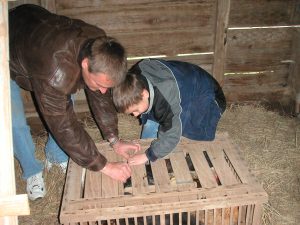
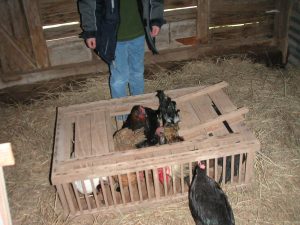
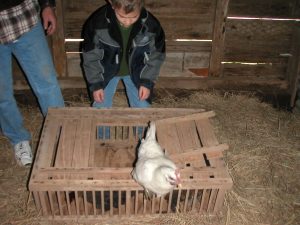
The Chicken House
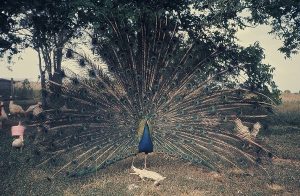
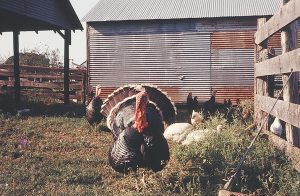
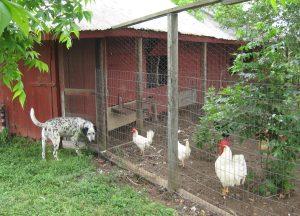
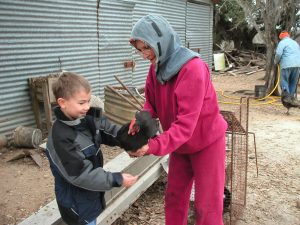
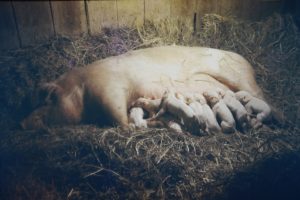
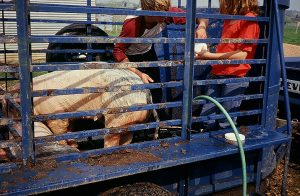
When we were spending weekends at the ranch in Medina, we found some saddles in very good condition, that were not being used, because there were no horses. There was a “bunk house” called “Rocking H” which was a very primitive cabin, and we put my sister and brother-in-law there as guests. My brother-in-law spent the whole night afraid he would be attacked by rattlesnakes. At Rocking H is where the saddles were, and we brought them back home with us, so we had saddles in Fayetteville, and we did not have horses. So when we were buying raw milk from the Radens (I can’t remember how we found them, someone told that is where you can buy raw milk), we learned that they they had horses but no saddles. So we asked if we could bring our saddles over on weekends and ride their horses, and they said yes.
Rosie the Cow
We used to ride horses every Saturday at the Radens, and we told them we were looking for a cow. They told us they had a cow who had been injured, who had a lot of trouble getting to the feed. She could not fight the other cows, so she wasn’t able to eat. We bought her for a small amount, maybe ten dollars, and we named her Rosie. She was our milk cow, and produced gallons of milk every day — milking twice a day, every day. Our whole family learned how to milk the cow. In the morning when everyone had to get out early for work, school, or sports, I often had to milk the cow.
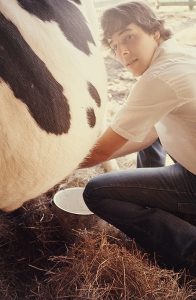
Rosie had a baby, but it was born prematurely, and we needed to feed it with a bottle.
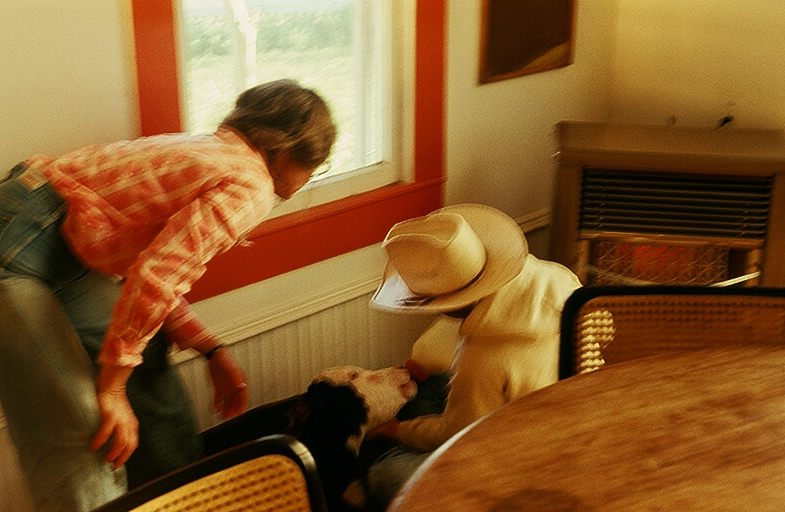
In the picture you can see the propane heater that kept the dining room warm. We had a heater in each room, and we had a propane tank next the the house, that connected to the heaters through pipes that ran under the house and then came up through the floor.
You can also see our dining room table and chairs. We still have the table – it’s the dining room table in my home today. The wicker back chairs have fallen apart, but we had them for a long time after leaving the farm. I love that in this picture Ben is feeding the calf while wearing a cowboy hat.
The calf grew to be a good size, and seemed to be healthy, but it died of something before it grew be a steer. Two cows died that year, we had no idea why.
Rosie, fortunately, remained healthy. We kept her until all the children moved away and didn’t need all that milk, and were not able to milk her every morning and night.
When we went to Maine, we would get a trailer from Spike and bring the cow to the Rumanciks who lived behind the church, and Rose Rumancik would milk our cow for us until we came home from vacation – usually for three weeks.
Sparky the Pony and the Horses
After we moved to the farm, we had Sparky the pony, whom the Rev. Derado family had given us. Their family had visited us for a weekend, which unfortunately was a weekend when everyone was sick, and because it was very cold the pipes froze, so in order to flush the toilet, we needed to bring buckets of water from the pond.
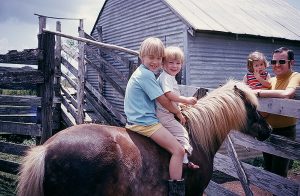
First we got Princess. I can’t remember where we bought her, but Clovis somehow learned about her and we brought her to the farm to keep Sparky and Rosie company. When we brought Princess home, she was carrying a foal, but when it was born, it died. She was a good horse, but frisky.
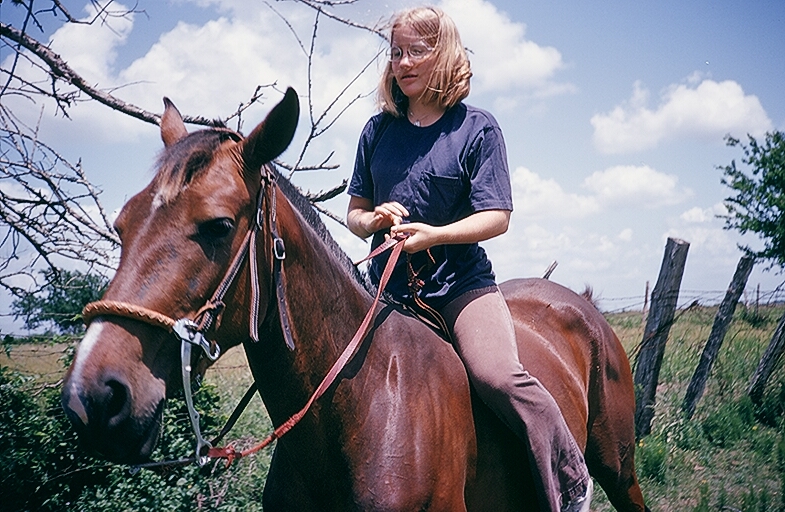
Sparky was fun and Princess was challenging but our children wanted more horses. Down 1291 there was a place, near where 147 meets 1291, there was a family that use to sell peaches, and they had two horses for sale, and we bought them, and named them Jennifer and Molly. We called Eddie Fields who came over to shoe them.
Picture of Eddie Fields shoeing the horses goes here.
We already had saddles from the ranch, which Clovis’s family had bought when they thought they would have horses but then never did buy any. So when we went to the Radens to ride their horses, we brought our own saddles. They didn’t have any saddles, because they had scenery horses, or maybe they rode bareback. But they were very gentle horses.
Our new horses, Jennifer and Molly, were not quite as gentle but they were a lot of fun for our family. Now we could all go riding — the children could ride Sparky with one person in the saddle and one riding behind and holding on. Sparky was a great little pony and would tolerate any kind of experiments on how to hold on to a horse. Jennifer was very fast, and would sometimes break into a gallop so you to be careful not fall off. Molly was fat, and old, and slow. You never had to worry about her going too fast.
The Pond (aka “the Tank”)
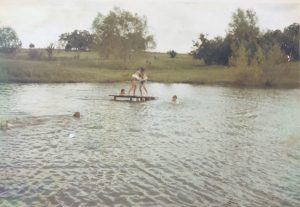
I found a place in Houston where I could buy barrels, they were plastic barrels with tight-fitting lids that were screwed on, so they would float because they were full of air. I knew we needed a raft, and I’m not sure how I knew about the barrels. I figured this out, I knew we could build a raft, and had to think how could we float it. There must have been some firm in Houston that sold these barrels, maybe a construction supply company, I don’t remember. But then I built the raft with 2 x 6 boards and then made a platform, and put the barrels full of air underneath them, and tied the barrels together with rope, and the raft just sat on top of them. I had initially built this type of raft at the Macdaniel house, and then when we bought the farm, I made a new one for the pond. I think we tied the rafts to cinder blocks to anchor the raft in the center so that it would not drift to the shore. The children spent hours playing in the pond, swimming out to the raft, and then playing a kind of wrestling game where they push each other into the water until only one person remained, as “King of the Raft.”
We also had a rowboat to use on the pond, for fishing or just rowing around for fun.
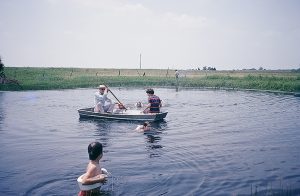
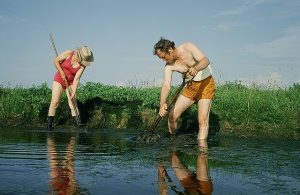
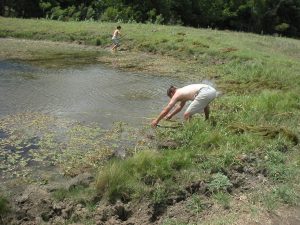
You would walk into the pond with the net, and you would kind of use it to scoop up any little fish that were there, there were little minnows, a couple of inches long, and these would be used for bait. You dumped them in bucket of water so they would stay alive until you needed to bait your hook. If you did not use them by the time you finished fishing, you just dumped them back into the pond and let them swim away.
When you caught a fish you could keep it in a bucket of water and when you had a bunch of fish you would bring them up to the house to clean them. The fish guts and heads would be given to the chickens, they would everything. You would put the fish filets in the refrigerator and then cook them for dinner. We never caught a lot of fish.
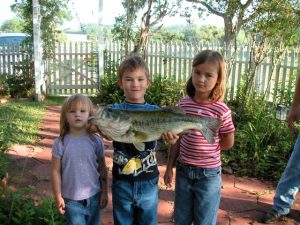
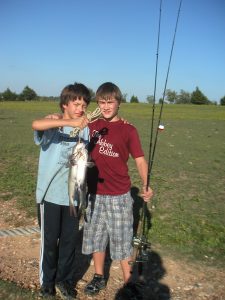
We were very lucky to catch one or two. John was the one who liked fishing more than any of the other children. There was no limit to the amount of time you could spend at the pond — and very little alternative, because we did not have a television. Later we did get the satellite dish for getting sports games that Clovis liked to watch, and the television was ?? ask John if he remembers.
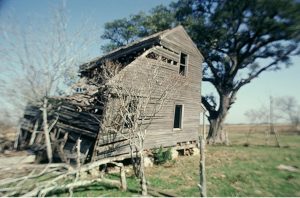
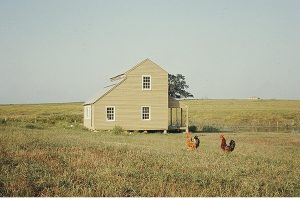
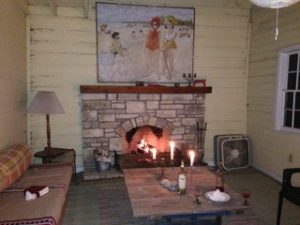
$500 House
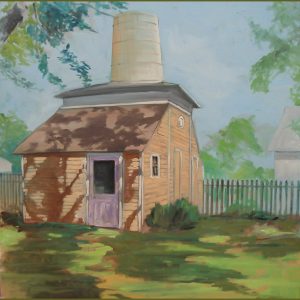
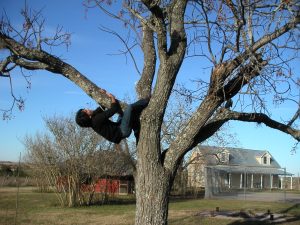 Ruben climbing in the tree. You can see in the background the chicken house on the left and the 500 dollar house on the right.
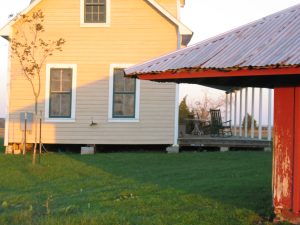 Heimsath Farm – 500 dollar house and chicken house. You can see the rocking chairs on the front porch. (Photo taken by Arjun Heimsath, Thanksgiving 2003)
In Houston the parks had two tennis courts where Clovis played tennis — one was close to our house, and the other wasn’t walking distance but was still pretty close. When Charlie lived in Houston, he and Clovis used to play tennis. In Austin the parks department had public tennis courts.But in Fayetteville there were no tennis courts at the time. (Now the school has tennis courts). So Clovis wanted to have a tennis court at the farm.
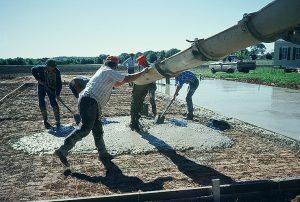
Clovis measured the area and marked where the slab should go for the tennis court, and Jerry Michalsky brought his crew to pour the slab. Clovis bought the net, and as the workers poured the cement slab, Clovis made sure the posts were put in correctly, anchored in concrete, and then when the court was ready, we installed the net. John was a very good tennis player and would likely have been the first person Clovis played tennis with on the new court.
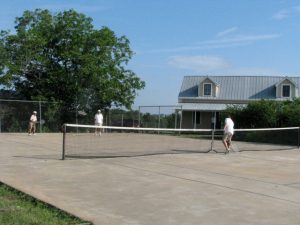
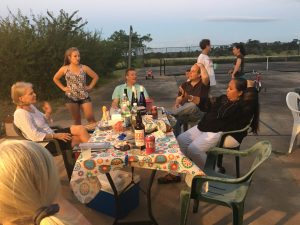
The tennis court turned out to be a great way to get to know people in Fayetteville who liked to play tennis. We could invite them up to visit for a game of tennis and cocktails afterwards.
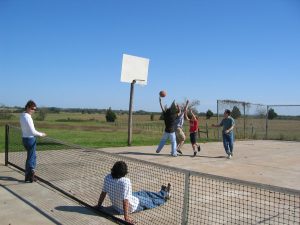
All the children wanted to play basketball, because that is the big sport in Fayetteville. The school is too small to have a football team but they have a nice gym for the basketball court, and we used to go and see the games. When there was a big basketball game the whole community would come to watch. That was the place to go, everyone came. The whole town was empty, there was nobody on the square because they were all at the basketball game.
To get good at basketball you need to practice. And so we put up a basketball hoop at the side of the tennis court.
When we had the Country Place Restaurant, Rose Rumancik would bake bread that we would serve to the guests. There was a farm on 1291, where there is now a kind of dance hall, but at that time it was a dairy. The man could come every Saturday morning and bring a gallon of milk on his shoulder and put it the refrigerator at the restaurant for us to serve that weekend. People would ask whether the milk was pasteurized, and we would assure them it was not.
We did a lot of work in the studio upstairs in the barn. When I made the wooden fish, I cut the wood downstairs in the shop, then I brought them upstairs to paint them. I had two 4 x 4 tables to work at. I still have one of them in my office upstairs here in the Casita.